Splicing 4mm Dyneema to a 20mm Double Tii-On
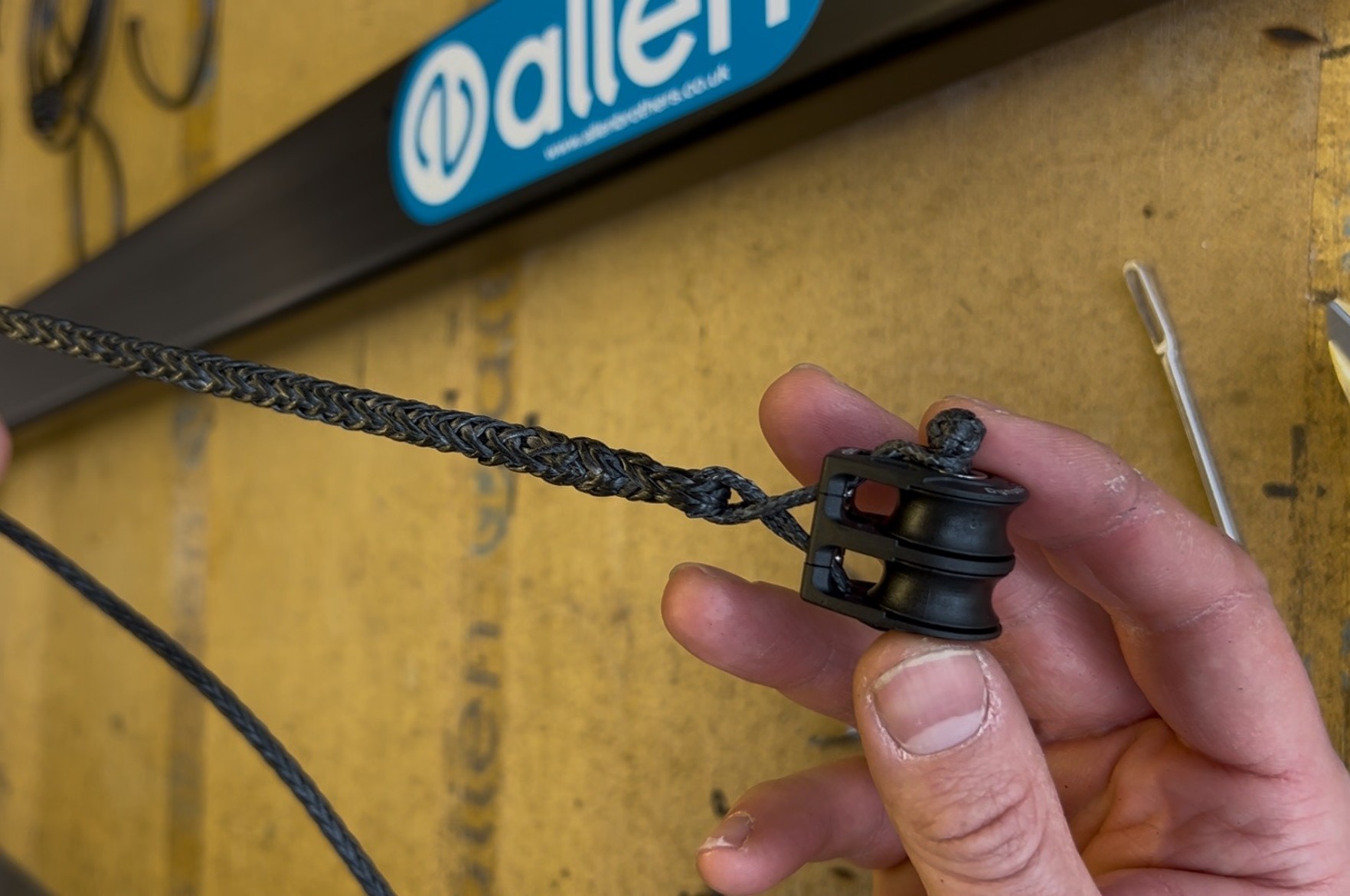
A Brummel splice is a strong and reliable way to create a loop in Dyneema rope, commonly used in high-performance sailing applications. In this guide, we’ll show you how to make a Brummel splice using 4mm Dyneema (TY4112) and attach it to a 2mm Tii-Shackle (A20120), which will then be used to secure a Dynamic 20 Tii-On Double Block (A2022Tii).
The A2022Tii— a dynamic 20mm tii-on block—is designed for soft attachment with thinner lines, up to 3mm is best. While a 4mm line can pass around the block, it can be difficult to rig due to the size of the opening. Instead, using a 2mm soft shackle simplifies the installation and provides a secure attachment point for the Brummel-spliced loop.
Another advantage of using a Tii-Shackle is that it helps maintain the block’s structural integrity under load. Thicker lines can exert outward pressure on the block’s body, increasing the risk of the top opening up under shock loads. A crossed Tii-Shackle ensures the load pulls inward, reducing this risk and allowing the block to operate at its designed working loads.
At Allen, we sell all the tools and components you need to complete this splice, including the rope, block, and splicing tools. Follow along with our step-by-step video and use this written guide below for reference.
Tools & Materials You’ll Need:
A2022Tii – 20mm Dynamic Tii-On Double Block.
A20120 – 2mm x 120mm Tii-Shackle.
TY4112 – 4mm Dyneema D12 SK78.
5.5MMS-NEEDLE – Splicing Needle (also known as a fid)
FAB109 – Wire Pull Fid (The solid pull fid used in the video is coming soon!)
A-SCISSORS – Dyneema Scissors
A marker pen (for measurement marks)
Step 1: Loop The Tii-Shackle
Install the Tii-Shackle onto the A2022Tii.
Twist both sides of the Tii-Shackle inwards.
Loop the rope around the Tii-Shackle.
Pull through enough rope so that you have around one splicing needle length worth of tail.
Make a mark where you want the eye of the splice to form, you can make the loop as loose or tight as you want onto the Tii-Shackle.
Step 2: Creating the Brummel Lock
Using the splicing needle (5.5MMS-NEEDLE), pull the short tail section through the main rope at the mark to create the initial loop. You can adjust the tightness of the loop at this stage by pulling more or less the tail through.
Remove the tail from the splicing needle and insert the long main part into the splicing needle.
Pull the long main part of the rope through the short tail, effectively interlocking the two sections to create the Brummel lock.
Pull the rope tight to ensure the lock is secure.
Step 3: Burying the Tail
Lay the line out and measure the length of the short tail on the long main part of the rope and add another 5cm. Make a mark.
Insert the wire pull fid (FAB109) into the main line at the mark and run it down the hollow core until you reach the splice where you then exit the core with the fid.
Attach the tail end of the Dyneema to the fid and carefully pull it back inside the rope. You may need to twist and play with the outer rope to get the inner tail to slide through.
Pull the tail all the way through until it comes back out with the fid. The outer rope will be scrunched up at this point.
Step 4: Tapering & Finishing the Splice
To prevent a “step” in the line and to improve the loading capability it’s recommended you taper the inner tail.
Taper the tail by carefully extraction a few strands from the inner tail and then cutting off with the Dyneema scissors (A-SCISSORS).
When happy with the taper, milk the outer main section over the top of the short tail. The tail should completely disappear inside the outer main section.
Stretch and smooth out the splice to ensure everything is aligned.
Final Thoughts
This simple yet effective Brummel splice is a great way to create strong, low-stretch attachments for your sailing hardware. By using Allen’s high-quality blocks and splicing tools, you can ensure a professional finish with minimal effort.
This same process can be used with different diameter lines, as well as different tii-on blocks. If you have any questions, please get in touch with our technical team: Sales@allenbrothers.co.uk.
MORE GUIDES