High Load Thimbles – Why, When, Where?
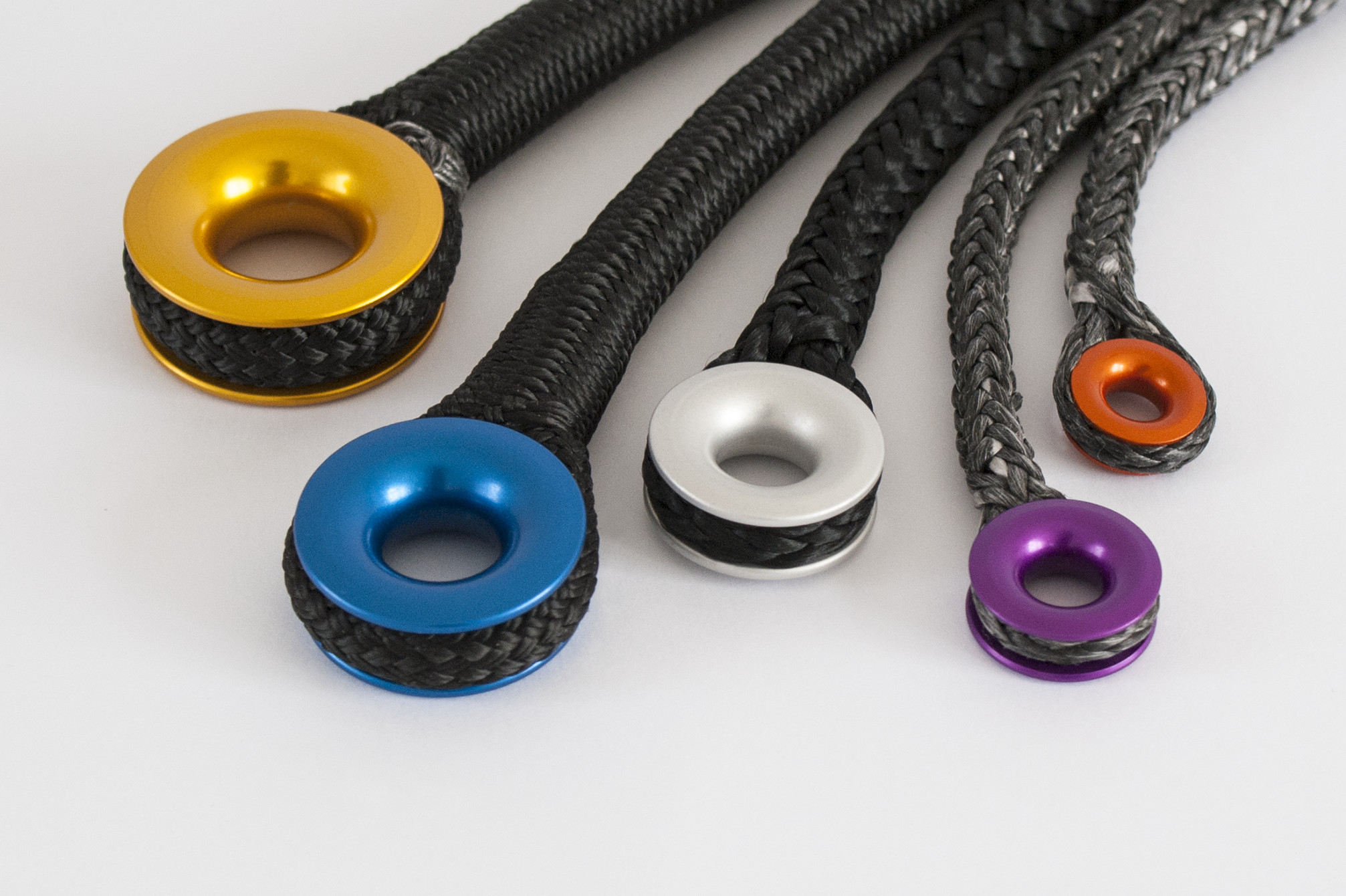
Also known as low friction rings these handy bits of hardware are used across many different areas of a sailboat. But they’re nothing new. In fact the high load thimble has been around for some time, just in slightly different forms. Originally made from wood and used on old style tall ships for adjusting running rigging and then more recently moulded in plastic to create light-weight, cheap alternatives. And now, CNC machined from high grade aluminium. But why, when and where should you use a high load thimble?
Jump to
When should a high load thimble be used?
Where can a high load thimble be used?
High load thimble sizing guide
What is a high load thimble?
If you haven’t come across a high load thimble (low friction ring) it is essentially a doughnut-shaped piece of aluminium with a concaved shape around the outside, like that of a traditional pulley sheave. However, unlike a traditional pulley sheave, the rope usually runs through the hole of the thimble and the outside concave is used to tie the thimble onto the end of a control line or deck eye. The middle hole is rounded and smooth to allow the rope to run as freely as possible without snagging. High load thimbles are available in many sizes to suit a wide variety of rope and applications.

Why use a high load thimble?
One of the beautiful things about the high load thimble is its simplicity. There are no moving parts and it is turned from one piece of aluminium. This makes the finished product extremely strong and lightweight for its size.
To compare; a 20mm block weighs 10 grams and has a maximum working load of 115kg. A 20mm high load thimble weighs 2 grams and has a maximum working load of 400kg. That is an 80% weight saving to a 247% working load increase.
So why isn’t everyone replacing blocks for high load thimbles? Although the weight-saving and working loads seem to be a no-brainer, high load thimbles aren’t the best solution for all applications.
The clue lies in their name – Low Friction Rings.


-
 50mm Aluminium Thimble£27.79
 -
25mm Aluminium Thimble£13.19


When should a high load thimble be used?
High load thimbles are not a direct replacement for every block and pulley on the boat. Simply put, they are LOW friction rings and not NO friction rings. With no moving parts the rope running through the centre of a thimble will always be subject to more friction than rope running around the sheave of a plain or dynamic bearing block.
This means high load thimbles should typically be used in applications that are subject to more static loading, such as halyards or backstays. Although they could be used as a replacement for dynamic blocks in a mainsheet, spinnaker or jib sheet system, the fast running lines will quickly heat up adding even more friction to the turning point of the rope and make trimming the sheet harder as well as quickly deteriorate the quality of the line.
Unlike the traditional block or pulley design, high load thimbles allow the line to deflect at any angle when entering and exiting the turning point. However, any more than a 90-degree turn adds a considerable amount of friction so should only be done if the rope is not in a fast-moving application.

-
20mm Aluminium Thimble£12.24
-
15mm Aluminium Thimble£10.74


Where can a high load thimble be used?
The applications for high load thimbles is almost endless, but here is a few of our favourite.
2:1 Halyard turning point for yachts
On bigger keelboats, there is sometimes space to have a 2:1 purchase at the top of the mainsail. Although a block would reduce the friction in the system more than a high load thimble. The block would be larger and heavier, right in a place where you don’t want excess weight or windage. So in this application, a high load thimble works well. It also gives more security as the high load thimble has less chance of breaking under the static loads that will be applied when sailing.

Take up systems
The shape of the thimble allows it to easily be spliced or tied into a take up system. Take up systems generally don’t need to be frictionless as they are just used to keep control systems tidy. The high load thimble is a good option due to its small size and cost effectiveness.


-
Stainless Steel Thimble£5.71
-
Stainless Steel Thimble£5.80
-
Stainless Steel Thimble£6.35


Jib sheet and spinnaker sheet deflectors.
The high load thimble is a great choice for spinnaker tweaker lines or jib sheet deflectors. As the thimble can be spliced into a control line it makes for a light weight, low profile turning point.


Bridle and traveller line sliders.
Dinghy sailors that use a bridge or traveller for their mainsheet system might want to consider this set up. The high load thimble attached to a mainsheet block creates a nice low profile traveller system which can slide from side to side with ease.

Cascade System
If you have a highly loaded cascade system then a high load thimble can be a great choice for one of the more loaded turning points in the system and where the rope doesn’t actually move a great deal. An example of this is in a backstay system or at the top of a vang cascade.

Optimist Sprit System
The low weight and simplicity of the high load thimble makes it a great choice for the Optimist sprit system. Having the choice of six colours also allows sailors to add a personal touch to their rig.

High load thimble sizing guide
| SKU | Title | Depth mm | Inside diameter mm | Maximum working load kg | Outside diameter mm | Weight g |
| A..82-10 | Stainless Steel Thimble | 6 | 10 | 250 | 11 | 1 |
| A..82-14 | Stainless Steel Thimble | 8 | 14 | 300 | 15 | 1.5 |
| A..82-8 | Stainless Steel Thimble | 5 | 8 | 150 | 10 | 0.5 |
| A..87-15 | Aluminium Thimble | 6 | 6 | 300 | 15 | 1 |
| A..87-20 | Aluminium Thimble | 8 | 8 | 400 | 20 | 2 |
| A..87-25 | Aluminium Thimble | 10 | 10 | 800 | 25 | 5 |
| A..87-30 | Aluminium Thimble | 12 | 12 | 1000 | 30 | 7 |
| A..87-35 | Aluminium Thimble | 14 | 14 | 1500 | 35 | 11 |
| A..87-50 | Aluminium Thimble | 21 | 20 | 2000 | 50 | 40 |
| A..87-75-BLK | Aluminium Thimble | 31 | 28 | 2500 | 75 | 154 |
| A..87-90-BLK | Aluminium Thimble | 38.5 | 28 | 3000 | 90 | 289 |
To find out more about anything in this article or to use any of the images or information please contact Sales@allenbrothers.co.uk.